
A response within 7 days!
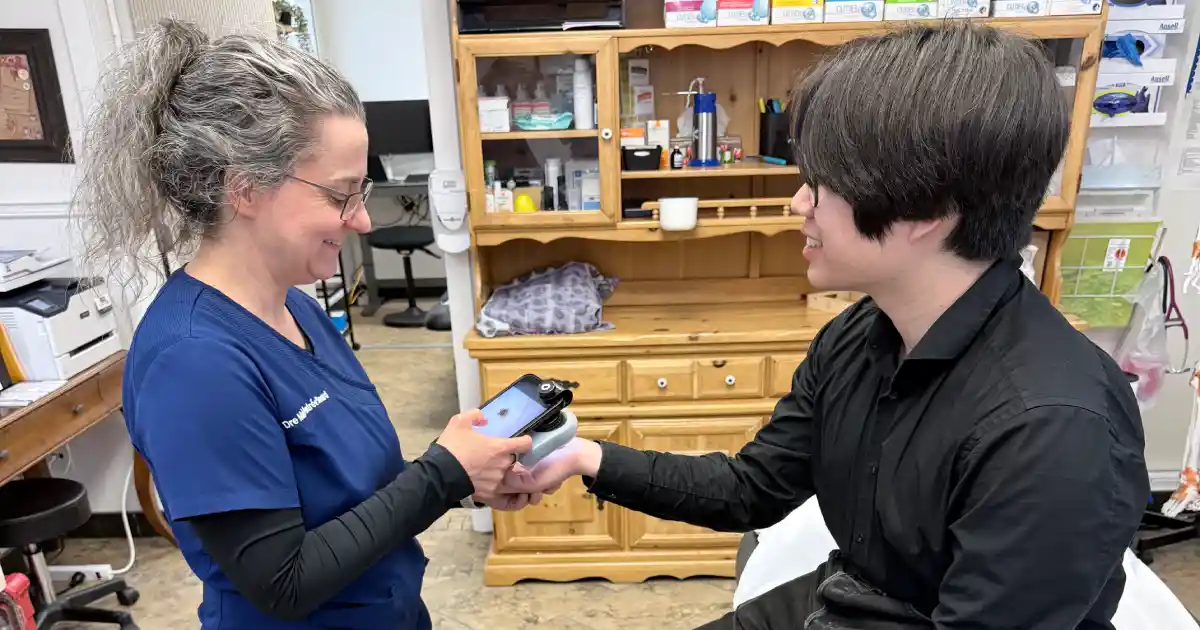
Teledermatology is a form of remote medical consultation. Here’s how it works: your family doctor takes photos of the skin lesion that concerns you and includes a clinical description. They then send everything to a dermatologist via the Virtual Care Platform (PSV), an online tool that is becoming increasingly popular in Quebec. The dermatologist reviews the case remotely and responds within an average of 7 days.
No travel. No waiting room. No anxiety or uncertainty for months on end.
In 85% of cases, no in-person dermatology follow-up is necessary. Photos and clinical information are sufficient to make an accurate diagnosis remotely. The situation is then managed entirely by the family doctor, who administers the treatment recommended by the specialist.
For the remaining 15%, an in-person dermatology follow-up is recommended. However, teledermatology significantly speeds up this process. In cases of aggressive skin cancer, where every week counts, this can make all the difference.
More than a million days of waiting time saved
Since the launch of this telehealth service in March 2022, the results speak for themselves. As of May 2026, 42,890 requests have been processed. Among the patients who still required in-person follow-up (approximately 9,000 people), avoiding the initial wait has saved more than one million days of waiting time.
In four years, the program has more than doubled in size. And since the platform is publicly owned, there is no cost to the healthcare professionals who use it.
What doctors have to say
For Dr. Cynthia Eid, a dermatologist, teledermatology offers benefits that go beyond mere efficiency:
Teledermatology allows us to “clear out” waiting lists that can sometimes be very long. It provides patients with answers to their questions without having to wait anxiously for an appointment or leave their homes.
She also sees this as a unique opportunity to strengthen the skills of primary care physicians:
My response kills two birds with one stone: I guide the medical approach in the patient’s best interest. I also provide the attending physician with some tools so that they can become more self-reliant in the future. Communicating in writing allows us to refine our responses and cite scientific references. This, in itself, is a form of teaching.
In the field of family medicine, Dr. Marie-Andrée Savard, a general practitioner, highlights the direct impact on the quality of care:
Teledermatology often makes it possible to start treatment sooner, while reducing the number of in-person visits required. I remain convinced that it improves access to dermatological care and helps reduce wait times for many patients.
Of course, not all cases are suitable for a remote consultation. It is up to the family doctor to determine whether teledermatology is appropriate for the situation. As Dr. Eid points out: “An in-person physical examination is still necessary for many patients.”

A tool that paves the way for the future
Beyond the numbers, teledermatology is part of a broader transformation of Quebec’s health and social services network. By familiarizing teams with digital tools, it helps pave the way for the Dossier santé numérique (DSN) and an increasingly connected healthcare system. All of this benefits the public by making high-quality services increasingly accessible.