
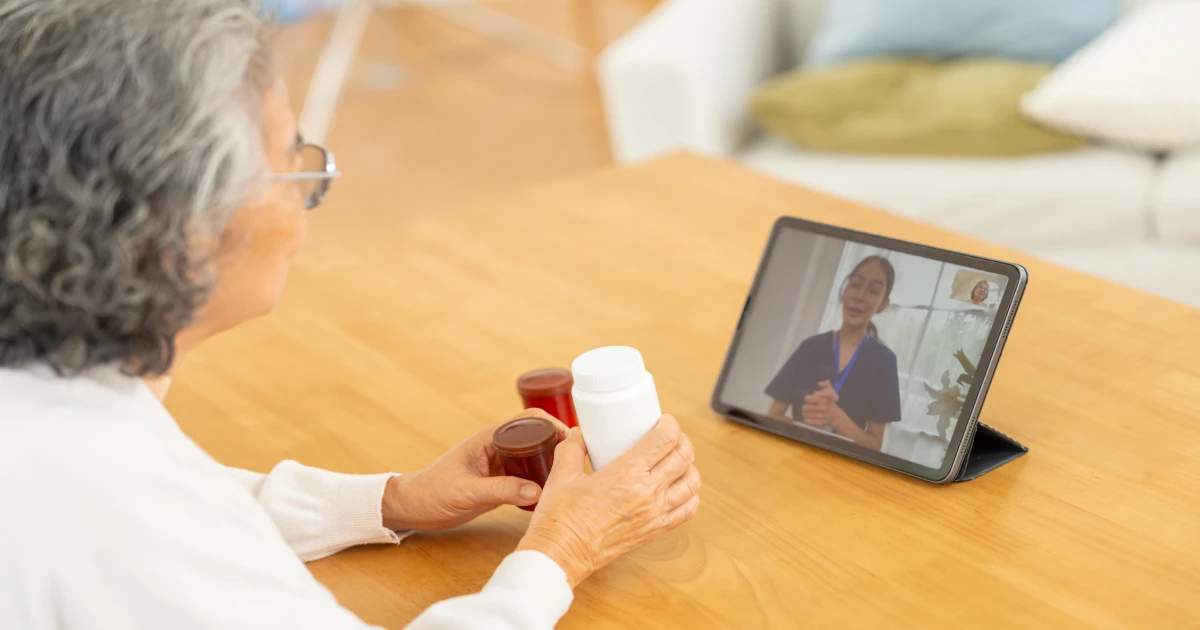
To better understand how virtual cancer care works, we spoke with Armel Lonfils and Caroline Martinez-Bouchard from the cancer program at the CIUSSS de l’Est-de-l’Île-de-Montréal (CEMTL). Here’s what we learned.
Another way to receive care
Virtual care is based on a simple principle: providing the necessary care at the right time, in a safe and reassuring environment for the patient.
In practice, this may include:
- care and medical tests performed at home or at the CLSC;
- medication delivered directly at home;
- daily check-ins with the care team, by phone or video call;
- hospital visits kept to a minimum, only when necessary. For example, for tests or treatments, with the option, if needed, to receive care at the cancer day clinic for specific treatments;
- prompt admission to the hospital if your health deteriorates, without having to go through the emergency room.
Even when receiving care at home, individuals enrolled in this program remain admitted to the hospital. This ensures they have prompt access to specialists and the necessary care. In addition, they can return to the hospital at any time if the situation requires it.
A safe and compassionate model of care
At Hôpital Maisonneuve-Rosemont, the same care teams support both inpatients and patients receiving home care.
This ensures:
- continuity of care;
- a relationship of trust between the patient and their care team;
- access to specialized expertise at all times, seven days a week.
To qualify for virtual care, certain criteria must be met. For example, there must be a caregiver available at all times. This helps ensure safety and smooth delivery of care at home.
A positive experience for patients and their loved ones
One year after its implementation, the results are very positive:
- most patients and their loved ones say they are satisfied with the care they have received;
- many highlight the comfort and sense of well-being that comes with staying at home;
- a decrease in hospitalizations and fewer unnecessary trips to the hospital.
The CIUSSS de l’Est-de-l’Île-de-Montréal is continuing to evaluate this model in order to improve it and, eventually, consider expanding it to other care settings.
This project demonstrates that it is possible to receive cancer care in a safe, compassionate, and personalized manner while remaining at home.
Home hospitalization in the spotlight
Check out these two other articles on the approach to home hospitalization using telehealth: