
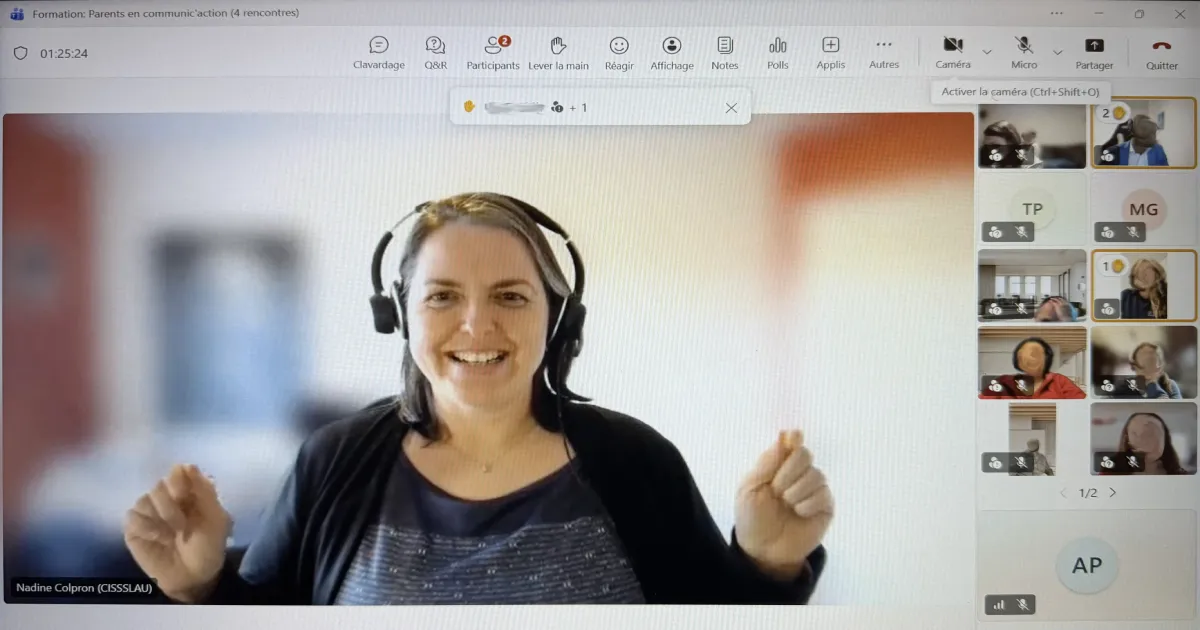
We met Stéphanie Beaulieu, clinical coordinator from the Continuum langage, parole et communication (CLPC) Centre-Sud at the CISSS des Laurentides. She is part of the team that quickly recognized the potential of telehealth to better meet the needs of families. Here’s what we’ve learned.
A pioneering team
The CLPC teams were among the first to offer remote services and to collaborate with other professionals using digital tools. In 2019, a pilot project was launched to provide training for parents. The goal was simple: to support parents in their role with their children, while making services more accessible. Then, in the context of the COVID-19 pandemic, the use of telehealth accelerated, becoming a fully integrated part of regular service delivery.
Assessing and intervening in new ways
Initially, the service provided remotely focused primarily on child assessments. Criteria were established to determine in which situations telehealth was appropriate. The speech-language pathologist shared images on screen, and the parent indicated what the child was pointing at or observing. This close collaboration made it possible to gather relevant clinical information while respecting the child’s pace.
Next, follow-up sessions were offered in the same way. To do this, speech-language pathologists used adapted materials: on-screen games, interactive presentations, simple and fun activities, etc. The team reports that young children generally respond very well to on-screen sessions and that a connection with the speech-language pathologist is easily established.
Easier access for parents
Today, telehealth remains a well-established option. All parent education sessions are now offered remotely. This makes it possible to bring together multiple parents at the same time.
This approach offers several advantages: less travel, fewer absences, and greater parent participation. Digital tools like Teams and Bookings (two apps from the Microsoft suite) make it easier to schedule appointments and organize meetings.
Another telehealth tool has proven very useful: the Virtual Care Platform (PSV). This is a secure provincial tool that allows parents to send videos of their child’s daily life and complete online questionnaires. This helps the speech-language pathologist better understand situations at home and provide tailored advice.
Telehealth is offered as one option among others. Each family works with the speech-language pathologist to choose what best suits their situation. Therapists find that the effectiveness of remote follow-up is comparable to in-person follow-up.
An approach tailored to each child
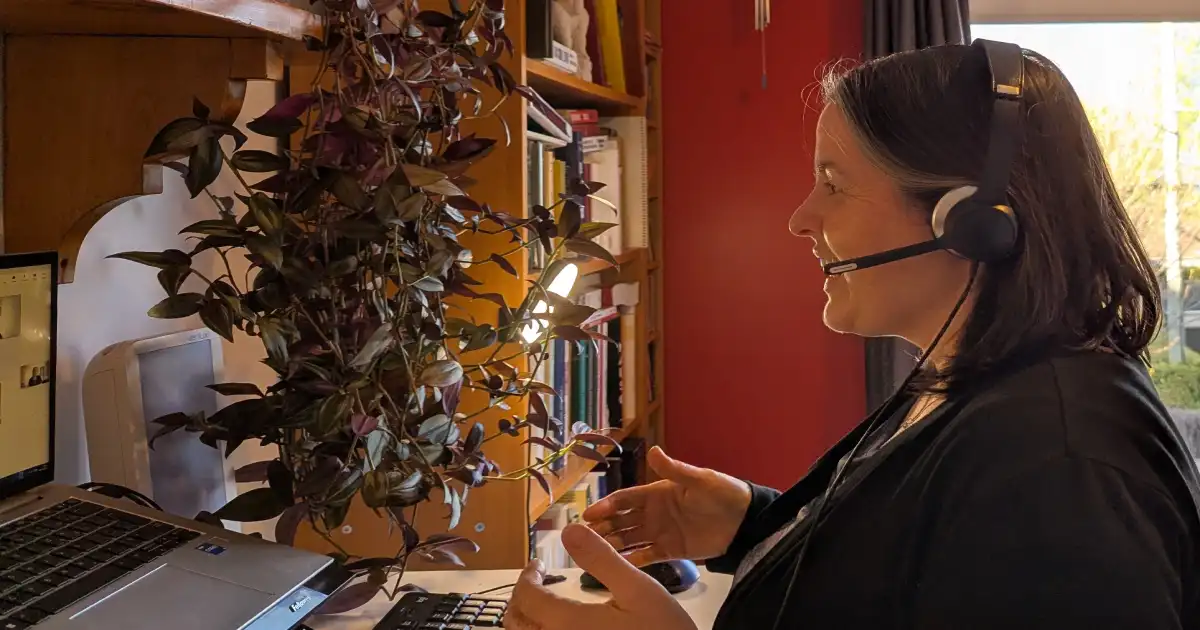
Certain situations are particularly well-suited to telehealth. In the case of stuttering, for example, follow-ups are made easier by meetings on Teams, online questionnaires, and informational resources shared with parents. The team notes that for very young children, remote work often comes naturally, especially when it comes to vocabulary development. Other aspects, such as phonology or sounds, may be better suited to in-person sessions.
Each situation is evaluated on a case-by-case basis: some children are captivated by the screen, while others explore the house during the session. In all cases, parents play a key role.
A constantly evolving practice
The rollout of telehealth proceeded without any major difficulties. Practitioners quickly adapted and learned to use simple, effective tools, without trying to replicate exactly what happens in face-to-face settings.
Today, this practice—which combines in-person and remote care—continues to evolve. The goal remains the same: to provide accessible, effective, and compassionate services that meet the needs of children, parents, and healthcare professionals. Pediatric speech-language pathology is undoubtedly another field where telehealth improves the delivery of care, regardless of where patients live.