
Telehealth continues to gain momentum as a means of improving access to quality services throughout Quebec. Here’s a look back at the experience of a team from the Directorate of Programs for Intellectual Disabilities, Autism Spectrum Disorders, and Physical Disabilities (DI-TSA-DP) at Santé Québec Bas-Saint-Laurent.
Meeting needs in new ways
Providing specialized services across a vast territory is a constant challenge. Some teams must cope with a limited number of healthcare professionals and long distances between service locations. In this context, the prolonged absence of a pediatric physical therapist led a team in the Bas-Saint-Laurent region to rethink its approach.
Rather than suspending services, the team chose to focus on telehealth. This solution allowed a physical therapist to provide remote support while maintaining a clinical presence for the children through the team’s other professionals.
Telehealth in rehabilitation: remote expertise
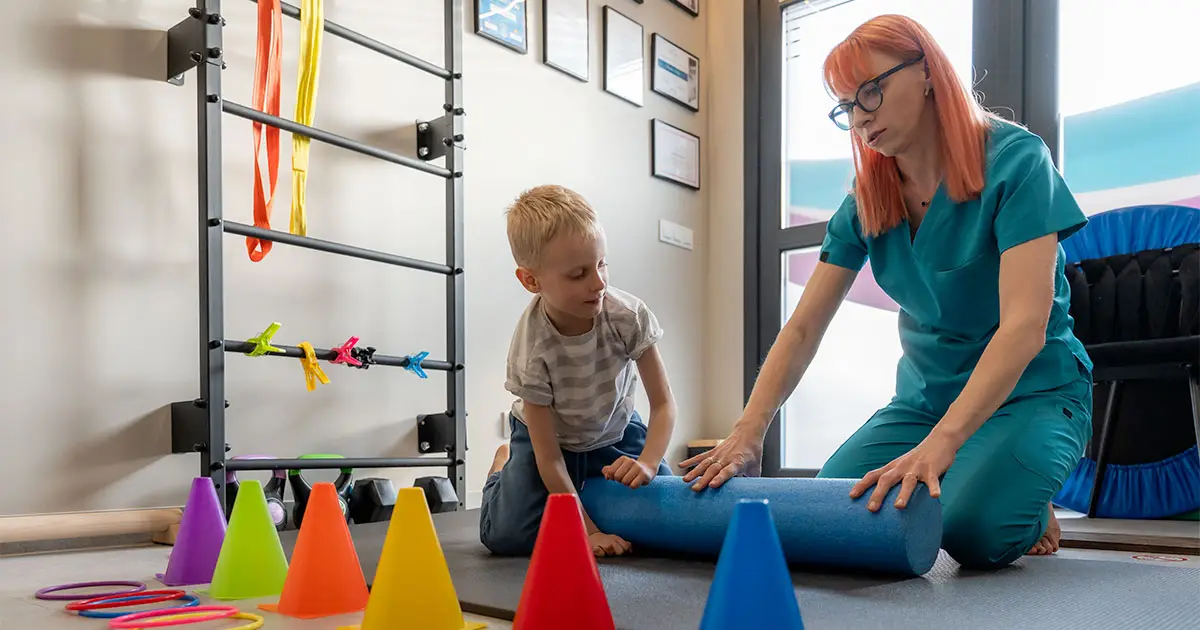
The model developed is based on a hybrid approach: A physical therapist connects remotely via video call, while an occupational therapist colleague is present with the child and their family. The physical therapist observes the session in real time and asks her colleague to perform certain maneuvers and observations.
This approach allows patients to access specialized expertise, even when it is not available in their local healthcare setting. It facilitates collaboration among healthcare providers, ensures better follow-up, and reduces travel. Depending on the needs, remote follow-up can take various forms:
- follow-up video calls;
- remote assessments and observations;
- collaboration and support among healthcare providers.
Key conditions for success
Despite the challenges, this approach fosters close collaboration among various professionals. Rehabilitation educators, early intervention specialists, occupational therapists, perinatal nurses, and health and social services assistants all contribute to gathering information and observing the child.
The development of digital tools in recent years has facilitated the adoption of new practices. However, certain limitations remain. Unequal access to the Internet in some regional communities can complicate matters. Furthermore, there will always be interventions that must be conducted in person.
A source of inspiration for the public health network
The experience in the Bas-Saint-Laurent region shows that it is possible to innovate to provide services that are accessible, safe, and tailored to the realities of the network. In Quebec, more and more care teams are demonstrating that by combining on-site presence, remote interventions, and interdisciplinary collaboration, it is possible to maintain access to specialized services.
See also
Telehealth is transforming rehabilitation at Institut de cardiologie de Montréal